
Wellbeing as core business
Why does wellbeing in the workplace matter to you?
Workplace wellbeing matters because our people are our greatest asset. Looking after their wellbeing is fundamental to both their success as well as the success of our practice. When people feel supported, connected and balanced, they are better equipped to do their best work, collaborate effectively and contribute creatively. A healthy and positive workplace fosters stronger teamwork, creativity and engagement, which ultimately leads to better outcomes for our clients.
Beyond the business benefits, caring for our people is simply part of being a good employer. We believe that investing in wellbeing is not only the right thing to do, but also essential to building a sustainable, high-performing and positive workplace culture. We are committed to creating an environment where our team feels valued, supported and able to thrive, both professionally and personally.
What wellbeing initiatives or programs (formal or informal) have you put in place to support your people?
At Fulton Trotter, we believe one of the most important wellbeing initiatives is creating a sustainable work environment. We focus on working standard hours rather than excessive overtime and provide flexibility through part-time arrangements and work-from-home options where appropriate. We also actively encourage staff to take annual leave and fully disconnect from work, recognising the importance of rest and recovery.
We have maintained an Employee Assistance Program (EAP) since 2021 and transitioned to the ACA’s Telus EAP service earlier this year, providing staff and leaders with access to confidential counselling, coaching and support services. We have also leveraged EAP training and educational resources on topics such as mental wellbeing, healthy lifestyles and financial wellness.
Beyond formal programs, we place a strong emphasis on connection and belonging. This can take the form of regular team lunches, celebration morning teas, EOFY and Christmas events, service milestone recognition, and acknowledgement of personal and professional achievements. These intentional opportunities for connection help foster a supportive workplace culture.
What prompted your practice to make wellbeing a priority, and how do you make wellbeing part of the day-to-day culture of the practice?
Looking after our people has always been an important part of our culture, but the impacts of COVID-19 highlighted just how critical wellbeing is for both individuals and organisations. During this period, Fulton Trotter worked with the ACA in adapting and promoting the Architects’ Mental Wellbeing Toolkit – a valuable resource for all architectural practices. This reinforced the importance of taking a proactive and structured approach to supporting our people and prompted us to formalise some of the wellbeing practices and support structures that had previously evolved organically.
Today, wellbeing is embedded into our day-to-day culture rather than being treated as a standalone initiative. It is considered alongside productivity, client service and business objectives, rather than as a separate or competing priority, recognising that healthy, engaged people are fundamental to sustainable performance. We support this through open communication, flexible work arrangements, regular social connection, recognition of personal and professional milestones, and encouraging staff to take annual leave and fully disconnect from work when needed.
The introduction of an Employee Assistance Program provided an additional layer of support and has helped normalise conversations around mental health and wellbeing across the practice. Our leaders also play an important role in modelling healthy work practices, regularly checking in with team members and fostering an environment where people feel comfortable seeking support. We want our people to feel valued and supported not only in their professional lives, but also through the personal challenges and opportunities that arise outside work.
What initiative or change has had the greatest impact, and what have you learned from implementing it?
The introduction of our EAP has had the greatest impact. It has provided staff with access to confidential professional support while also giving leaders valuable coaching and training resources. Importantly, it has helped normalise conversations around wellbeing and mental health across the business.
One of the key lessons has been that wellbeing support must be visible, accessible and ongoing. Simply offering a service is not enough. Regular communication, education and leadership endorsement are critical to ensuring people feel comfortable accessing support when they need it. We have also learned that wellbeing initiatives are most effective when they are part of everyday workplace culture rather than standalone programs, which is why we continue to invest in both formal wellbeing resources and informal opportunities for connection and support.
Practice leaders and owners carry significant responsibility for the wellbeing of others. How do you look after the wellbeing of your own leadership team?
As a leadership team, we make a conscious effort to support one another and create space for open conversations about workload, challenges and priorities. Regular leadership meetings provide an opportunity to check in, share concerns and problem-solve together rather than carrying issues individually.
We encourage our leaders in the same way we encourage the rest of our team: to maintain realistic expectations, set healthy boundaries, take leave, and recognise that leadership is a shared responsibility rather than something carried alone.
Access to our EAP is available to leaders as well as staff, providing confidential support and guidance when needed. It enables us to lead effectively, make sound decisions and create a positive workplace culture for everyone.
What support structures are in place for practice owners when they are dealing with difficult periods, such as financial pressure, workload challenges or staff issues?
Practice owners face many of the same pressures as other team members, so having access to support is equally important. Our directors and associates can access coaching, counselling and manager support through our EAP, providing a confidential sounding board when navigating challenging situations.
In addition, our directors have worked with an executive leadership coach for several years. This has been invaluable in helping us navigate business challenges, manage periods of uncertainty, develop as leaders, and maintain perspective during demanding times.
Perhaps most importantly, we view leadership as a shared responsibility. Our leadership team is committed to supporting each other through open conversations about workload, people matters and business challenges, ensuring no one carries these pressures alone.
What have you changed about the way the practice works to reduce unnecessary stress or pressure?
One of the most effective changes has been placing a greater emphasis on communication and transparency. Keeping our team informed about upcoming changes, project demands and business priorities helps reduce uncertainty and anxiety.
We also involve staff in problem-solving and decision-making wherever possible, which not only leads to better outcomes but also helps people feel valued and supported.
We have focused on creating a more sustainable approach to work by setting realistic expectations around workloads, encouraging staff to work standard hours rather than excessive overtime, and providing flexibility through part-time and work-from-home arrangements where appropriate. These measures help our people balance competing professional and personal responsibilities while maintaining high-quality outcomes for our clients.
In addition, we have invested in strengthening our leadership capability and relationships through understanding different personality and communication styles. To support this, we hold regular ‘Leadership Labs’, setting aside dedicated time to explore leadership and wellbeing topics, seek expert input, and build practical skills that improve communication, collaboration and decision-making. These sessions create space to step back from day-to-day pressures, reflect on challenges and learn from one another.
Perhaps most importantly, we have worked to foster a culture where wellbeing is considered alongside productivity, client service and business objectives, rather than as a separate or competing priority. This helps ensure that decisions about workload, resourcing and business performance take into account the wellbeing of our people as well as the needs of the practice.
How do you recognise when someone, including a leader, may be struggling, and what advice would you offer other practices about the best way to respond?
Often the signs are subtle. Changes in behaviour, increased stress responses, withdrawal from colleagues, difficulty concentrating, changes in communication patterns, or a decline in enthusiasm can all indicate that someone may be finding things challenging. These signs can be just as relevant for leaders as they are for other team members.
We have found that a combination of formal and informal check-ins is important. Regular one-on-one meetings, performance and development conversations, and leadership discussions provide structured opportunities to understand how people are going. Equally valuable are the informal conversations that occur throughout the workday, which often create space for people to raise concerns or seek support in a more natural way.
The most important thing is to create a culture where people feel safe asking for help and where wellbeing conversations are normal rather than exceptional. When people trust that they will be supported rather than judged, they are more likely to speak up before challenges escalate.
Our advice to other practices is to check in early, listen without judgement, and focus on understanding rather than immediately trying to solve the problem. Not every situation requires an immediate solution, but every person benefits from feeling heard. Creating an environment where support is visible, accessible and regularly discussed can make a significant difference to both individual wellbeing and workplace culture.
What have you learned about wellbeing as a practice owner or leader that you wish you had understood earlier in your career?
One of the most valuable lessons I learned early in my career came from a manager who reminded me that what we do is rarely a matter of life and death.
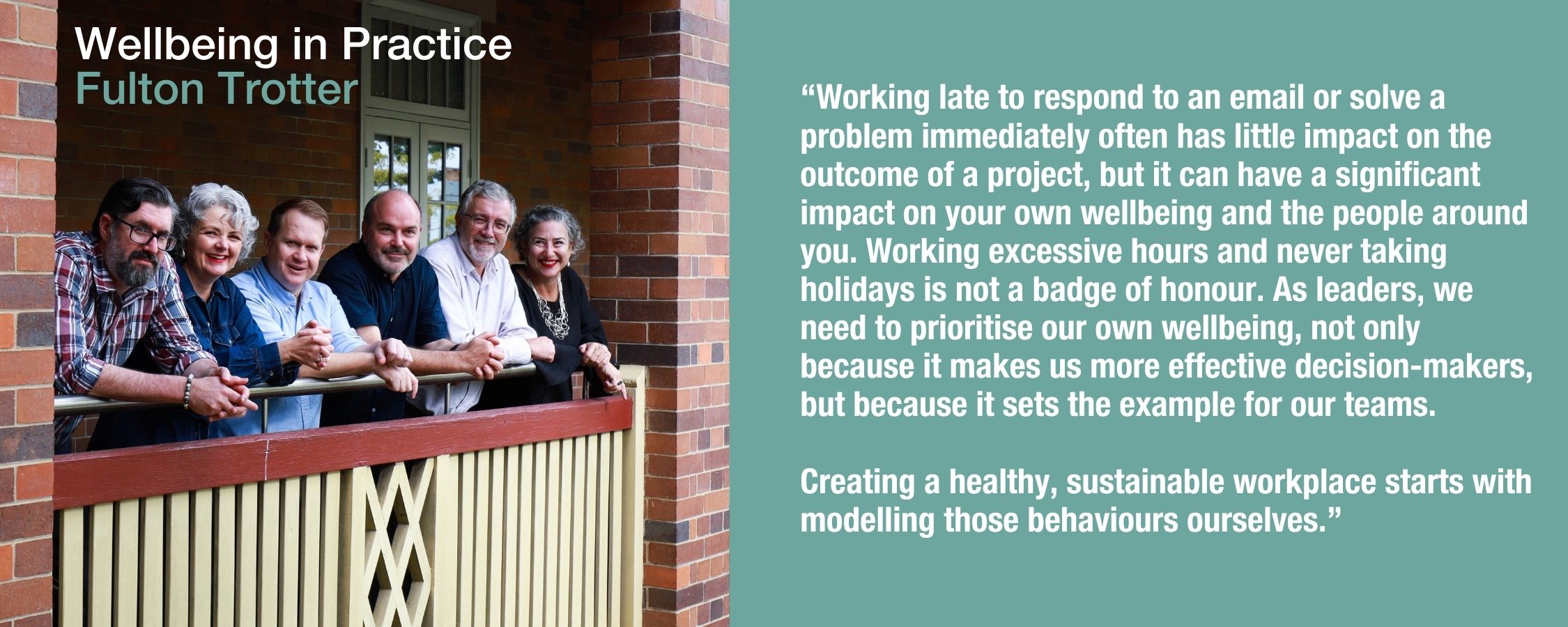
Working late to respond to an email or solve a problem immediately often has little impact on the outcome of a project, but it can have a significant impact on your own wellbeing and the people around you. Working excessive hours and never taking holidays is not a badge of honour. As leaders, we need to prioritise our own wellbeing, not only because it makes us more effective decision-makers, but because it sets the example for our teams.
Creating a healthy, sustainable workplace starts with modelling those behaviours ourselves.
What prompted your practice to sign up for the ACA’s EAP service, and what has been your experience with the service?
We moved to the ACA’s Telus Health EAP service earlier this year after reviewing our existing provider. The service offered excellent value while maintaining a comprehensive range of wellbeing and support options for both staff and leaders.
Our experience has been very positive. The platform is easy to access, the app is user-friendly, and the range of available resources means there is something to suit different needs and preferences across our team.
One of the aspects we value most is that Telus recognises that people engage with wellbeing support in different ways. Rather than relying solely on traditional counselling services, it provides support through podcasts, webinars, articles, digital resources, coaching and counselling, making it easier for individuals to access information and assistance in a format that suits them.
The service has also helped us keep wellbeing visible within the practice through regular communications, educational content and leadership resources. This aligns with our belief that wellbeing support should be accessible, ongoing and integrated into everyday work life, rather than only being utilised during times of crisis.