Embracing innovation in practice
What are some of the most important business lessons you have learned?
One of the most important lessons is that culture and business performance are deeply connected. Practices often focus on projects, clients and financial outcomes, but sustainable success comes from investing in people.
I’ve also learned the importance of communication. Many challenges in practice management can be traced back to unclear expectations or assumptions. Transparent communication builds trust and helps teams navigate change.
Finally, I have learned that continuous improvement is essential. The most successful practices are not necessarily those with the biggest projects, but those willing to regularly review how they work and adapt to changing circumstances.
What are the biggest challenges and opportunities involved in practice management in 2026?
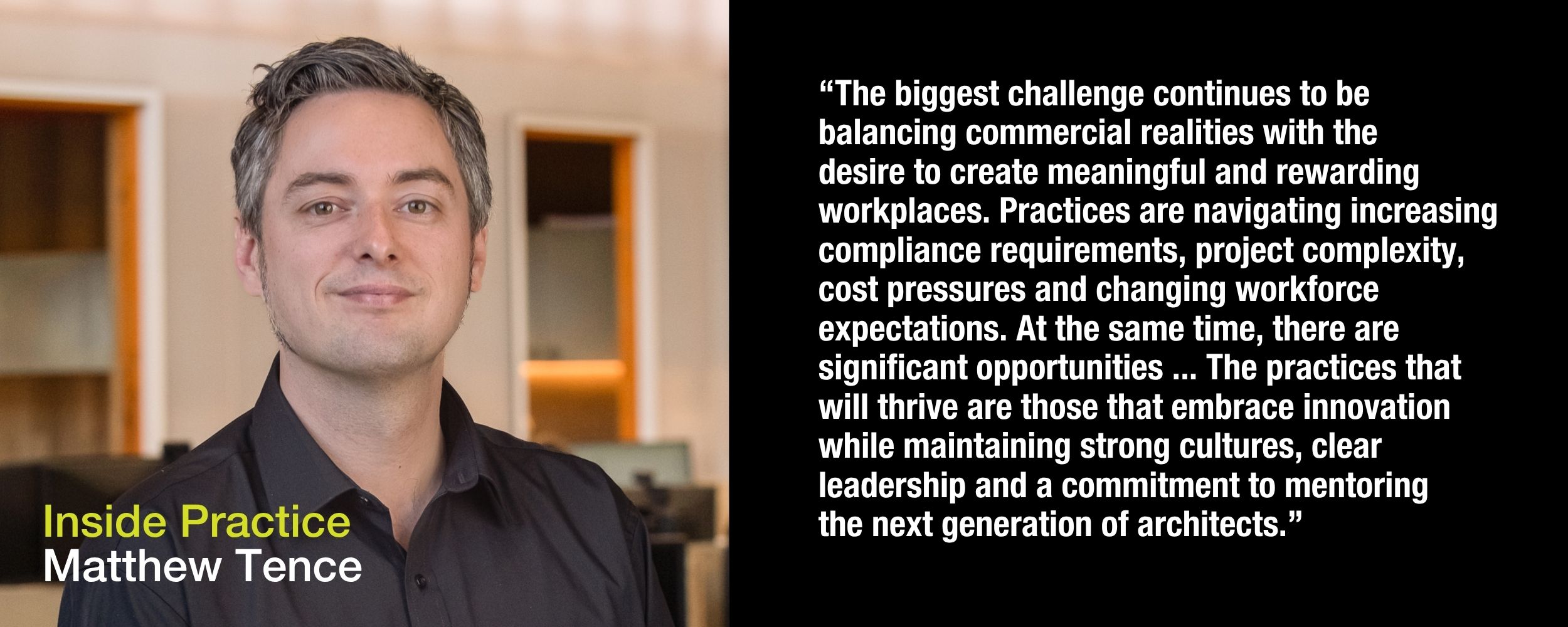
The biggest challenge continues to be balancing commercial realities with the desire to create meaningful and rewarding workplaces. Practices are navigating increasing compliance requirements, project complexity, cost pressures and changing workforce expectations.
At the same time, there are significant opportunities. Technology is helping practices become more efficient and collaborative. There is growing recognition of the importance of staff wellbeing, professional development and flexible work arrangements.
The practices that will thrive are those that embrace innovation while maintaining strong cultures, clear leadership and a commitment to mentoring the next generation of architects.
Can you tell us about a key project or business initiative in your practice?
One initiative I am particularly proud of has been the development of JCB’s Learning Management System. We joined a beta program for an application added to our intranet via Knowledge Architecture. They are a tremendous partner to work with and have taught me a lot.
As practices grow, one of the biggest challenges is ensuring knowledge is shared consistently across teams and generations of staff. The LMS provides a structured platform for professional development, onboarding, technical learning and leadership growth. Six months ago we didn’t have a system; now we have 10 structured courses. They are giving us the pathway to capture the collective knowledge of the practice and makes it accessible to everyone, whether they are a student, graduate, architect or senior leader.
The initiative reflects a broader belief that learning should not be left to chance. By investing in people and creating clear pathways for development, we can strengthen culture, improve quality, and create more rewarding careers for staff.
What’s one thing you wish you’d known earlier in your career?
The value of partnership and relationships. This probably amplified six or seven years into the role.
I’ve developed a range of partnerships with industry colleagues, software suppliers and other parties. Some I’ve worked with across two or three practices.
When you’re the only person in your role in a practice, having trusted partners is a big help and an important resource.
Secondly, the value of employing people with more experience than you and what they can bring to a role. I’ve had the privilege of managing a range of people who make my job easier, through their wisdom, experience and collaboration.
What advice would you give young practitioners interested in practice management or leadership?
Find two or three good long term mentors that you can be vulnerable with.
Read some great books on management theories and practice management.
Ask a lot of questions.
Be brave and make a few mistakes and learn from them quickly.
Where do you see the most positive change happening in architectural practice right now?
We are starting to go through a big leap with AI. A bit like transitioning from rotring pens to Autocad in the 90s. It’s pretty exciting what AI might do in practice.
We are looking at a range of things and have started to explore the implementation of AI Agents. I’m using them personally for Practice Management tasks around Contract Reviews, Resourcing analysis, Financial analysis. The early signs are that it will help us get to the answers we need quicker, and we can then do more with our time.
What motivated you to volunteer on an ACA Committee, and why does contributing to the collective work of the profession matter to you?
I joined the ACA Committee because I believe the profession is strongest when practitioners contribute beyond their own practice. The challenges facing architecture – whether workforce issues, regulation, education or business sustainability – cannot be solved by individual firms alone.
I’ve always been committed to our industry doing better and my role on the ACA committee matters a lot to me. It feels like being on the Committee means I can help shape our industry and make a difference.
What I like about the ACA is that it provides a platform for practitioners to share experiences, advocate for better outcomes and help shape the future of the profession. Being involved has given me the opportunity to contribute to issues that matter deeply to architects and to help ensure the profession remains vibrant and sustainable.
Collective advocacy matters because it gives our profession a stronger voice. It allows us to support one another, influence policy and create a better future for architects, practices and the communities we serve.