
Making space for expertise
What business achievement are you most proud of, and why?
Managing a much-loved architecture studio has been a highlight of my career. Six Degrees was built on a core manifesto of ‘democratic business friendship’, which I think is a very strong basis for any business, and I take my hat off to the founders for coming up with it. I’ve always seen my role as being a stabilising force within this structure. I’m proud that we prioritise our studio as a place where high design ambition and human decency can coexist, and where people feel safe to grow, speak up, and do their best work together.
What leadership approach has served you best in practice, and how has it evolved over time?
There’s never a moment when I’m not learning from the people in our studio. I’d say I try to lead with clarity and heart. I’ve moved from feeling I have to do everything within studio management, to knowing my role is to create space for others to lead and take ownership of their expertise.
What’s one thing you wish you’d known earlier in your career?
That you don’t need to know everything straight away. Nobody ever does. Surround yourself with smart people, listen to them, trust your instincts, trust your judgement, and don’t shrink to make others comfortable.
What challenge has most shaped the way you lead or run a practice today?
Leading the studio through the COVID era reinforced the importance of calm, transparent leadership, clear communication, and really looking out for people’s wellbeing. Those lessons, which were honed in a very intense period, continue to guide how I operate today.
Have you ever challenged established norms in architectural business culture to create space for yourself or others? What was the outcome?
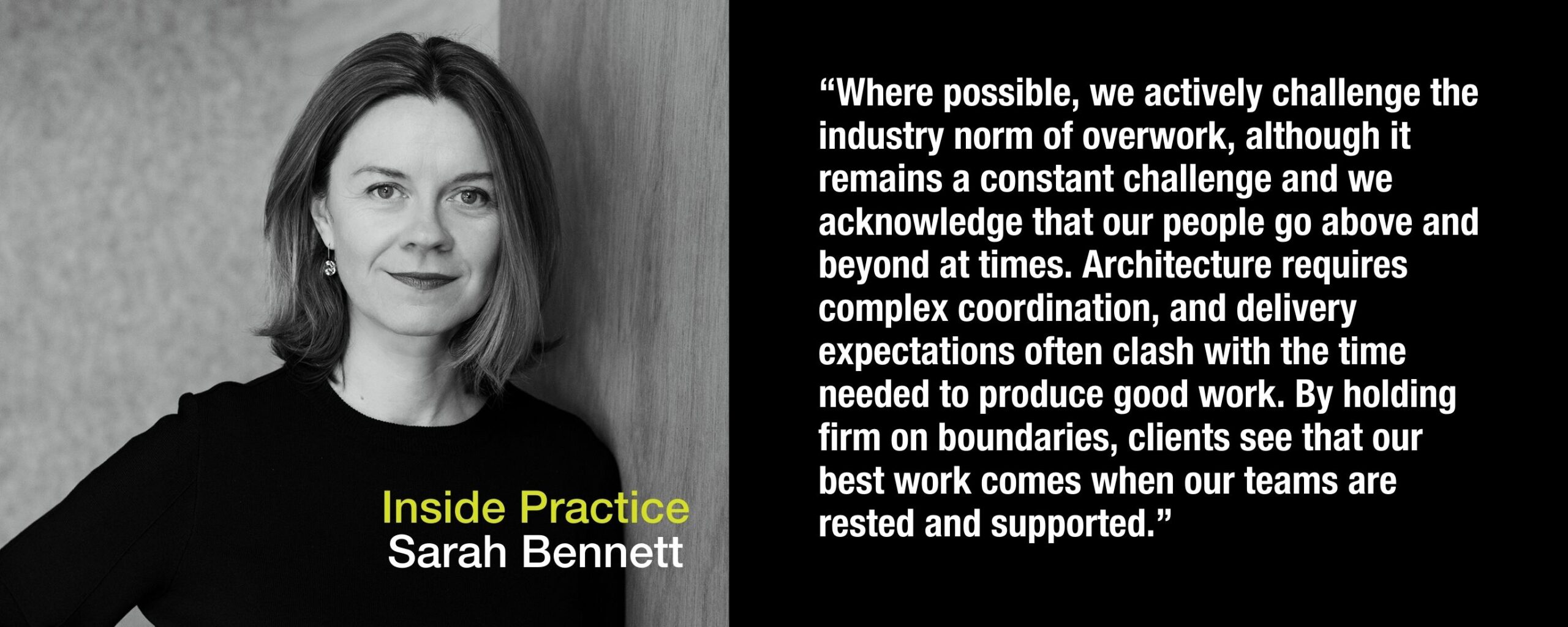
Where possible, we actively challenge the industry norm of overwork, although it remains a constant challenge and we acknowledge that our people go above and beyond at times. Architecture requires complex coordination, and delivery expectations often clash with the time needed to produce good work. By holding firm on boundaries – such as not working evenings, weekends, or public holidays – clients see that our best work comes when our teams are rested and supported.
Who have been the key influences or mentors in your career, and what did they teach you?
Mentors for me have been wide-ranging – not just industry-based. I grew up reading a lot of Gloria Steinem, always fascinated by how she helped people find their purpose and use their voices. Before Six Degrees, I worked for a decade in the entertainment industry, where commercial producers showed how to create work that resonates and is commercially viable – lessons that are relevant in architecture. My family – my brother, my sister, and my wife – all inspire me daily. Mentors are everywhere.
What advice would you give young women interested in practice leadership or ownership?
Enjoy the ride. It’s a great industry because it’s a very passionate profession. Trust yourself, trust your voice. As a woman, know that there can be dominating voices with unconscious tendencies to overlook you. The antidote is to stay happy, confident and grounded – you will always be heard. Keep your mind open to the wisdom around you, and stay alert to any rubbish too!
Where do you see the most positive change happening in architectural practice right now?
The most positive change I see is in the growing focus on community and cultural integration. At Six Degrees, we have dedicated teams designing for Country and sustainability, and we regularly invite speakers to expand our understanding of housing and who we design for. It’s really encouraging to see the industry increasingly prioritising these. I think this has improved a lot over the last decade.
What change would you most like to see in the industry over the next decade?
I’d like to see disciplines coordinated more coherently, supported by improved technology. This would free up time currently absorbed in complex coordination, allowing humans to focus on designing for people – as only humans can. Let AI smooth the edges, and let people create the design.
What motivated you to volunteer on an ACA Committee, and why does contributing to the collective work of the profession matter to you?
Strong professions are built by people willing to step forward, collaborate, and leave the industry better than they found it. I’m continually impressed by the ACA committee’s care and passion. There’s a genuine drive to support practices across Victoria and Australia and giving them access to the tools and knowledge they need to do well.
Sarah Bennett is the General Manager and Director of Six Degrees Architects in Melbourne. She has been a member of the ACA VIC/TAS Committee since 2022.