
Melbourne BoSP recap – Weathering the Storm
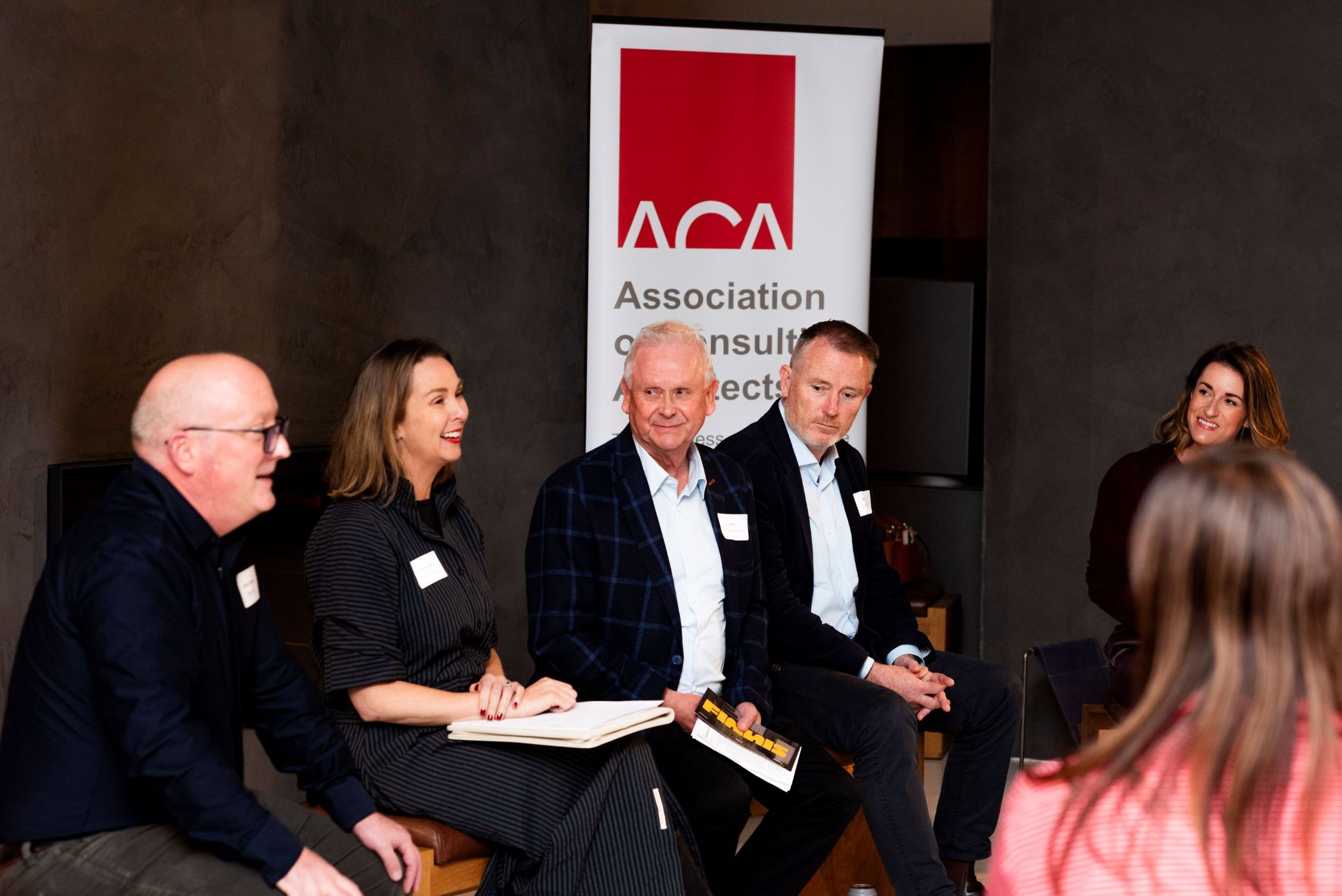
The ACA welcomed over 40 attendees to the Oblica showroom on 10 September for a Business of Small Practice (BoSP) event on building resilient practices. The message from our panellists was clear: resilience is not simply about surviving a downturn. It is about understanding your business, maintaining strong relationships and being prepared to adapt.
Panellists Richard and Sarah Bryant of Bryant Alsop Architects, Les Finnis of Finnis Architecture and Interiors, and Keith Ryan, Executive Director Victoria at the Housing Industry Association (HIA) drew on their experience across architecture, construction and business to discuss the current business climate. Expertly moderated by Jane Merrylees from Merrylees Architecture – and one of our ACA VIC/TAS BoSP Committee members – the panel explored how practices can respond in current market conditions while positioning themselves for the opportunities ahead. The panel emphasised that even in challenging times – with economic uncertainty, fluctuating workloads, rising costs and cautious clients – there are practical ways for practices to strengthen their resilience.
Understanding the market
One recurring theme was the difference between market reality and market perception. Persistent messaging about escalating construction costs can make clients reluctant to proceed, even where actual market conditions may be more nuanced.
That hesitancy contributes to the increasingly difficult ‘stop-start’ nature of architectural workflows. Projects pause because of planning issues, financing, changing budgets or nervous clients, then restart with little warning, making staffing and forward planning particularly difficult. The cumulative impact of ongoing economic, regulatory and industry change was characterised as ‘death by 1000 cuts’.
From a construction perspective, while costs continue to rise in many areas, reduced work volumes have also made some trades more competitive. At the same time, longer-term labour pressures remain, with major projects and events such as the Brisbane Olympics likely to compete for skilled workers.
The discussion reinforced the importance of practices looking beyond the headlines and understanding what is actually happening in their own markets.
Know your numbers
Financial literacy emerged as one of the key foundations of resilience.
Detailed cashflow forecasting, a strong understanding of internal costs and visibility over the pipeline enable practice owners to make decisions before circumstances force their hand. The panel discussed the value of maintaining 12-month cashflow projections and closely monitoring the real cost of running a practice.
Equally important is being realistic with clients about project costs. Early conversations about likely construction budgets, supported where appropriate by quantity surveyors, can help prevent projects progressing through substantial design work before affordability becomes a problem.
This also requires architects to confidently guide clients through the consequences of design decisions and help align expectations, scope and budget.
Demonstrating value and making expertise visible
In a tighter market, clearly communicating the value of architectural services becomes even more important.
The discussion highlighted the importance of educating clients about what architects actually do and why those services matter, including the use of simple explanatory material setting out the respective roles of architects, designers and builders. Making expertise visible can help shift the discussion away from fee alone and towards the value delivered through professional advice, design, documentation and risk management.
Adapting services
The panel also explored diversification. For some practices, resilience may involve extending into adjacent areas such as interiors; for others, it may mean restructuring the way architectural services are offered. A ‘select services’ approach, for example, can provide clients with access to architectural expertise at different scales.
The objective is not diversification for its own sake, but remaining alert to changing client needs and considering where existing skills can create new opportunities.
Relationships matter
While systems, forecasting and strategy are critical, the panel repeatedly returned to the importance of relationships.
Maintaining contact with clients, even when there is no major update, helps build confidence. Picking up the phone can resolve issues more quickly than a long email chain, while face-to-face conversations can prevent misunderstandings from escalating.
Professional networks are equally important. Engagement through organisations such as the ACA and other industry and community groups can provide new opportunities, peer support and insight into how others are responding to similar pressures.
The panel also cautioned against responding to a difficult market by simply underquoting to secure work. Maintaining integrity around pricing and delivering what has been promised supports stronger relationships and long-term referrals.
Building for the next cycle
Resilience also extends to workplace culture. Regular team communication, professional development and opportunities for staff to connect can help maintain morale when workloads and project pipelines are uncertain.
The discussion concluded by looking beyond the immediate downturn. Technology, AI, prefabrication and automation will continue to influence how clients engage with architects and how buildings are designed and delivered. But economic cycles themselves are nothing new.
For small practices in particular, weathering the storm means keeping a close eye on cashflow, being realistic about costs, communicating value, staying connected to clients and colleagues, adapting services where appropriate, and continuing to invest in workplace culture.
The businesses best positioned for the next upswing may well be those doing that foundational work now.
Our thanks to Oblica and their very knowledgeable team for hosting us on the night and giving us the opportunity to explore their showroom and product range. A wonderful and welcoming venue on a cold night!